
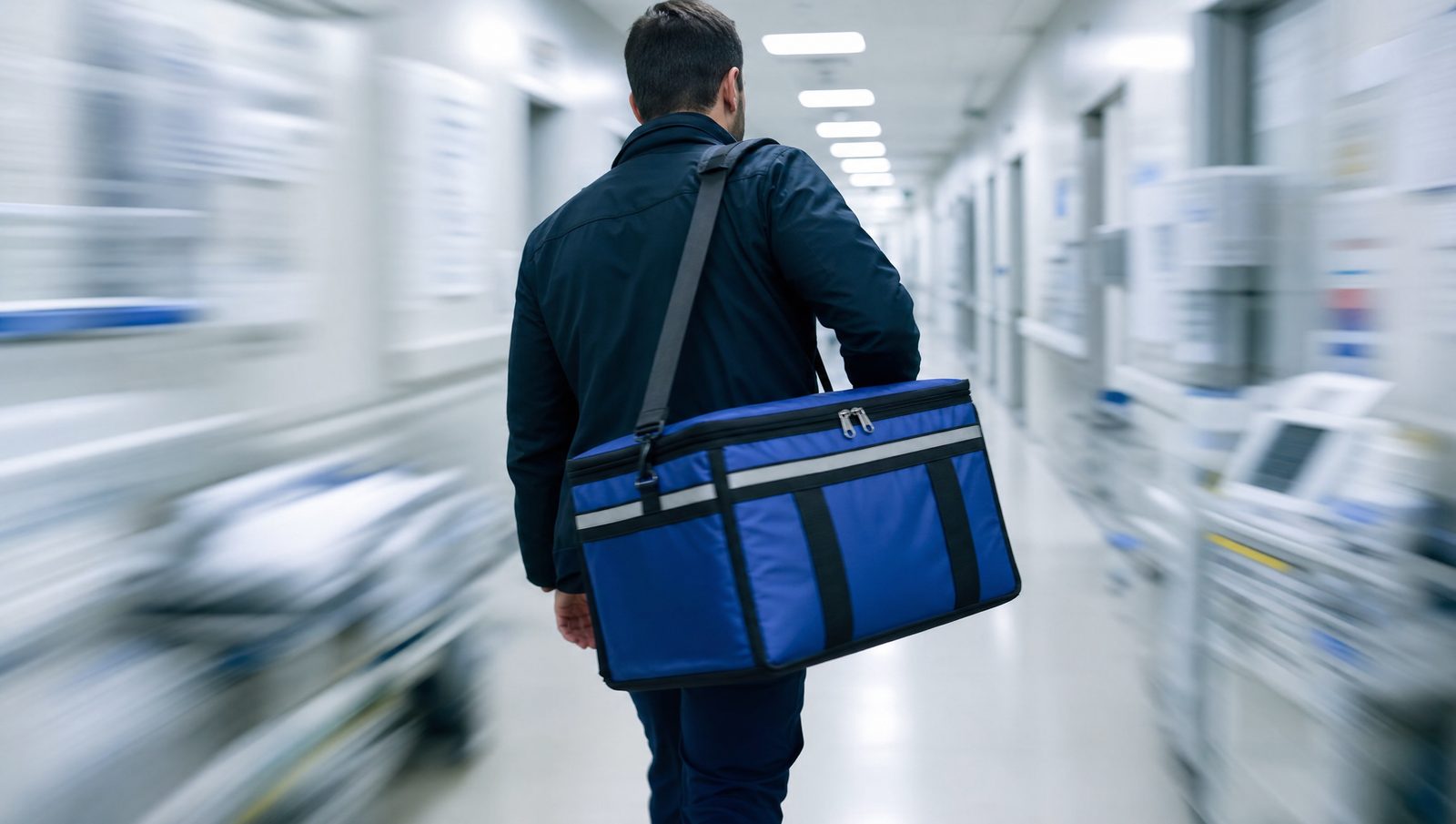
Same-day pharmaceutical delivery sits at the intersection of patient care and operational logistics — and when it works well, it's invisible. The medication arrives. The patient receives treatment. The pharmacist moves on.
When it doesn't work — when the courier is late, when the cold chain is broken, when there's no documentation of what was delivered or who signed for it — the consequences land directly on the clinical team and ultimately on the patient.
This guide is for pharmacies and healthcare providers who use same-day pharmaceutical delivery, or are considering it, and want to understand how to evaluate, implement, and manage it effectively.
When Same-Day Pharmaceutical Delivery Is Necessary
Same-day delivery isn't always the right choice — but there are specific scenarios where it's the only choice:
Urgent patient medication needs
A patient is admitted and requires a specialty medication not stocked in the hospital pharmacy. A home infusion patient's medication wasn't delivered before the weekend. An outpatient clinic runs out of a vaccine mid-immunization day. These scenarios require same-day response, measured in hours or less.
Supply chain disruptions
A manufacturer backorder, a delayed wholesaler delivery, or an unexpected demand spike can leave a pharmacy short on a high-demand medication. Same-day delivery from a pharmacy partner or alternative supplier bridges the gap.
Time-sensitive pharmaceutical products
Some medications have limited stability windows after compounding or preparation. Compounded sterile preparations, certain infusion medications, and reconstituted biologics may need to move from the compounding pharmacy to the clinical setting within hours of preparation.
After-hours emergencies
Healthcare doesn't stop at 5pm. Neither should pharmaceutical delivery. A same-day courier with evening and overnight capability is part of a complete emergency preparedness plan for any pharmacy serving acute care facilities.
What Separates a Same-Day Pharmaceutical Courier from a General Delivery Service
The difference matters — and it shows up in the details.
Driver qualification
General delivery drivers aren't trained in pharmaceutical handling requirements. A same-day pharmaceutical courier should employ drivers who understand temperature sensitivity, secure handoff procedures, and what to do if a delivery can't be completed as expected.
Temperature control capability
Not all same-day pharmaceutical deliveries are at room temperature. A courier that can move anything at ambient but has no refrigerated transport capability isn't a complete pharmaceutical partner.
Documentation standards
A pharmaceutical delivery without a proper proof of delivery — one that documents the recipient, timestamp, and condition of the delivery — isn't just sloppy. In a regulated environment, it's a compliance gap.
Emergency availability
A same-day pharmaceutical courier that only operates business hours isn't equipped for the most urgent pharmaceutical scenarios. Clarify hours of operation and after-hours protocols before you depend on any courier for urgent deliveries.
How to Set Up Same-Day Pharmaceutical Delivery That Works
Establish the relationship before you need it
The worst time to find a same-day pharmaceutical courier is when you need one in the next two hours. Establish the account, complete the Business Associate Agreement, confirm your ordering protocol, and run a test delivery before an emergency forces your hand.
Know the courier's geographic footprint
A courier that covers the city but not the suburbs isn't useful if half your delivery destinations are in the suburbs. Confirm that the courier's actual service area matches your actual delivery needs.
Define your standard for documentation
Decide what your proof-of-delivery requirement is before you start using the service — recipient name, signature, photo, temperature log. Communicate that standard to your courier and confirm they can meet it consistently.
Build escalation procedures
What happens if your courier misses a delivery window for a time-critical medication? Who calls whom? What's the backup plan? Define this in advance and make sure your staff knows the protocol.
Review delivery performance regularly
On-time rate, documentation completeness, exception handling — these are trackable metrics. A courier that can't tell you their on-time rate probably isn't tracking it, and a courier that isn't tracking it probably isn't managing it.
The True Cost of Getting Same-Day Pharmaceutical Delivery Wrong
When a same-day pharmaceutical delivery fails — whether it's late, compromised, or undeliverable — the visible cost is the replacement delivery or the delayed patient care. The less visible costs are the staff time spent managing the exception, the compliance exposure from a documentation gap, and the erosion of trust between the pharmacy and the clinical team depending on it.
The courier fee is not the only number that matters. The cost of a courier failure in a pharmaceutical context is almost always higher than the cost of a courier contract.
Need reliable same-day pharmaceutical delivery across New York, Philadelphia, or Seattle? Contact Sameday Logistics Health for a free estimate.